
Building vs Buying a House: What Central Virginia Homeowners Should Consider
When comparing building vs buying a house, most homeowners are trying to answer one practical question: which option will give us the home we actually want? Buying an existing house can be faster, but it often comes with compromises. Building a custom home takes more planning, but it gives you more control over the layout, land, finishes, and long-term function of the home.
For homeowners in Central Virginia, that decision can be especially personal. Some families already own land. Others want more privacy, a specific location, or a home that fits their lifestyle better than what is currently available on the market. Understanding the tradeoffs can help you decide which path makes the most sense.
Buying an Existing House Can Be Faster, But Less Flexible
One of the biggest advantages of buying an existing house is speed. If the right home is available, the process may move more quickly than building from the ground up.
The challenge is finding a home that truly fits. You may like the location but not the layout. You may love the kitchen but need more bedrooms. You may find a home with enough space, only to discover that the roof, HVAC system, windows, or finishes will need updates sooner than expected.
In many cases, buying an existing home means accepting someone else’s decisions. The floor plan, storage, room sizes, traffic flow, garage placement, outdoor living areas, and finishes were chosen for a different household at a different point in time.
Building Gives You More Control Over the Layout
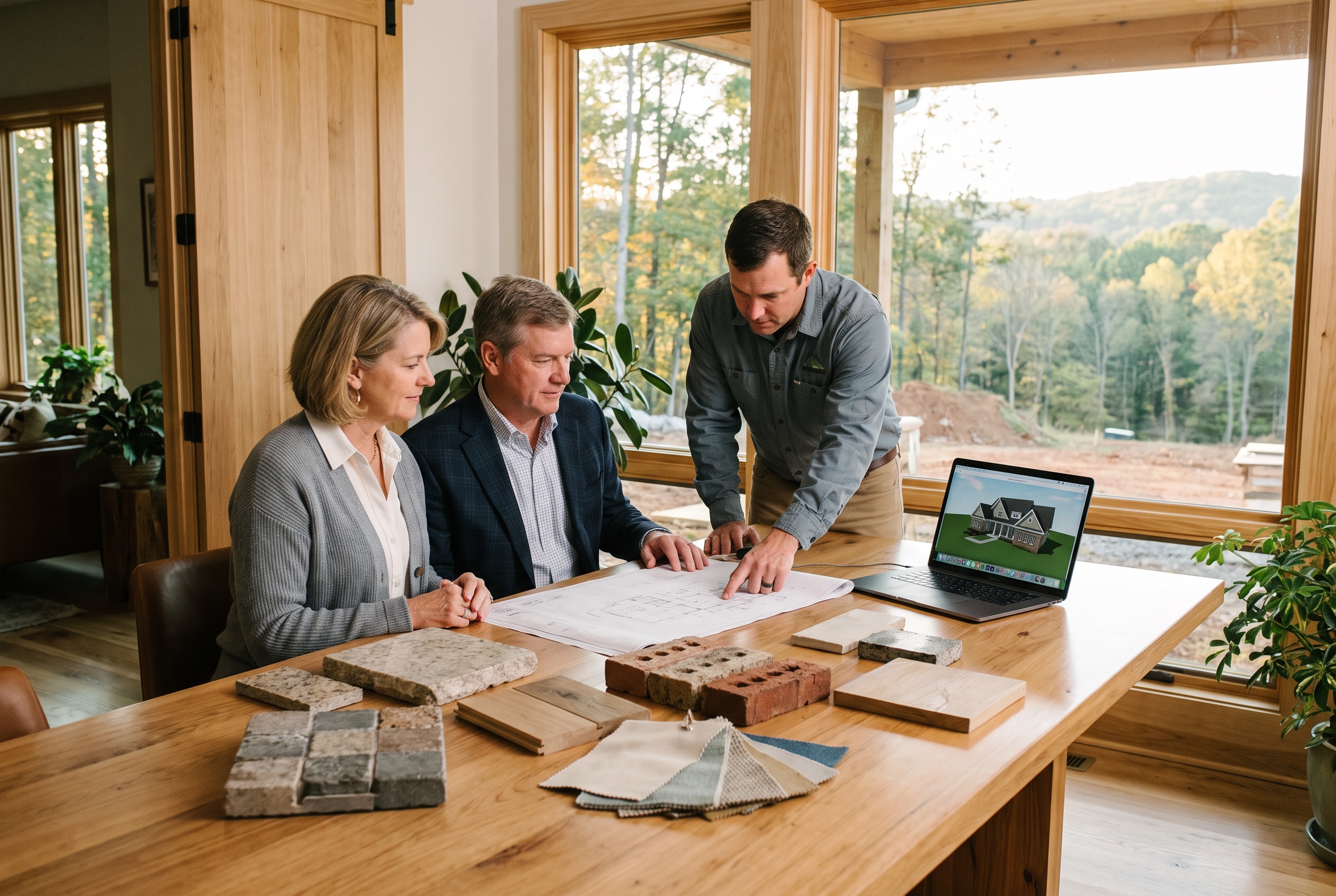
One of the clearest advantages of building is the ability to design around the way you live. Instead of working around an existing floor plan, you can choose or modify a plan that fits your household from the beginning.
That may mean a first-floor primary suite, a larger pantry, a more useful laundry room, a dedicated home office, a mudroom, wider hallways, a bigger garage, or a porch designed around the view.
Craftsman Custom Home Builders offers custom home plans that can be modified to fit your needs, budget, and property. This gives homeowners a strong starting point without forcing them into a one-size-fits-all design.
For more on that process, this related article explains how to customize custom home floor plans when building a home.
Building Can Help You Make Better Use of Land
For many homeowners, the decision between building vs buying a house comes down to land. If you already own property, inherited land, or a lot in a location you love, building may allow you to create a home that fits that specific site.
In Central Virginia, land can vary widely. A wooded lot in Bedford County, a sloped property in Amherst County, or open acreage in Campbell County may each call for a different approach. The home may need to account for grading, drainage, driveway access, septic, well placement, views, and sunlight.
Buying an existing house rarely gives you that level of control over site placement. With a custom build, the home can be planned around the property from the beginning.
If you are considering building on land you own or hope to purchase, Craftsman Custom Home Builders can help with early planning. Learn more about the build on your land process.
A New Custom Home Can Reduce Renovation Compromises
Many buyers purchase an existing home with the idea that they will renovate later. Sometimes that works well. Other times, the renovation list grows quickly.
A kitchen update turns into new flooring. A bathroom remodel reveals plumbing issues. A wall removal becomes more complicated than expected. Older windows, insulation, roofing, or mechanical systems may also need attention.
Building new does not mean every decision is simple, but it does allow those decisions to happen in the right order. Instead of adapting an older home after the fact, you can plan the layout, finishes, systems, and features before construction begins.
Energy Efficiency and Comfort Are Easier to Plan From the Start
New homes can also be planned with modern comfort and efficiency in mind. Insulation, windows, HVAC systems, air sealing, lighting, and appliance choices all affect how the home performs over time.
The U.S. Department of Energy offers homeowner guidance on energy-efficient design and home features through its Energy Saver resources. While every home is different, building new gives homeowners the opportunity to consider these decisions before the home is constructed.
In Central Virginia, where summers can be humid and winters bring seasonal temperature swings, comfort matters. A well-planned home can account for natural light, room orientation, insulation, airflow, and long-term maintenance needs.
Building Requires More Planning Up Front
Building a custom home is not usually the quickest path. It requires decisions about land, plans, permits, site work, finishes, budget, and timeline.
That planning stage is important. Before construction begins, homeowners may need to evaluate land conditions, review septic or well needs, understand local permits, choose finishes, and finalize the home plan.
If you are still weighing the timeline, this related article explains how long it takes to build a house in Virginia. You can also read more about building permits in Virginia if you are trying to understand the approval process.
Transparent Pricing Helps Make the Decision Clearer
One concern homeowners often have about building is cost uncertainty. That concern is understandable. Custom home projects can become stressful when pricing is unclear or when selections are handled through vague allowances.
Craftsman Custom Home Builders uses a No Surprise Pricing approach to help homeowners understand costs before construction begins. Instead of waiting until later to make major finish decisions, homeowners make selections early so the project can be priced more clearly.
This makes the comparison between buying and building easier. When you understand the cost of the land, site work, home plan, materials, and finishes, you can make a more confident decision.
For a deeper look at cost factors, read this related article on what affects the cost to build a house in Virginia.
So, Which Option Is Better?
There is no single answer for every homeowner. Buying may be the better fit if you need to move quickly, find a home you love, and are comfortable with its age, layout, and condition.
Building may be the better fit if you want more control, already own land, need a specific layout, care about long-term function, or want to avoid inheriting someone else’s renovation list.
When comparing building vs buying a house, think beyond the purchase price. Consider the land, repairs, renovations, energy efficiency, layout, storage, outdoor space, and whether the home will still work for your household years from now.
Planning Your Next Step
If you are considering building a home in Central Virginia, the team at Craftsman Custom Home Builders can help evaluate your land, review home plans, and provide transparent pricing before construction begins. You can explore completed homes in the portfolio or start the conversation through the contact page.
FAQ
Is building a house better than buying one?
Building may be better if you want more control over the layout, land, finishes, energy efficiency, and long-term function of the home. Buying may be better if speed is the top priority.
Is building usually more expensive than buying?
It depends on the land, home plan, site work, materials, finishes, and local market. Building can cost more up front, but it may reduce the need for renovations, repairs, or compromises after moving in.
What should I consider when comparing building vs buying a house?
Consider timeline, location, layout, land, repair needs, renovation costs, energy efficiency, storage, outdoor space, and whether the home fits your long-term plans.
Can I build a custom home on land I already own?
Yes, if the land is suitable for construction and meets local requirements. A builder can help evaluate access, grading, drainage, septic, well, permits, and home plan fit before construction begins.
