
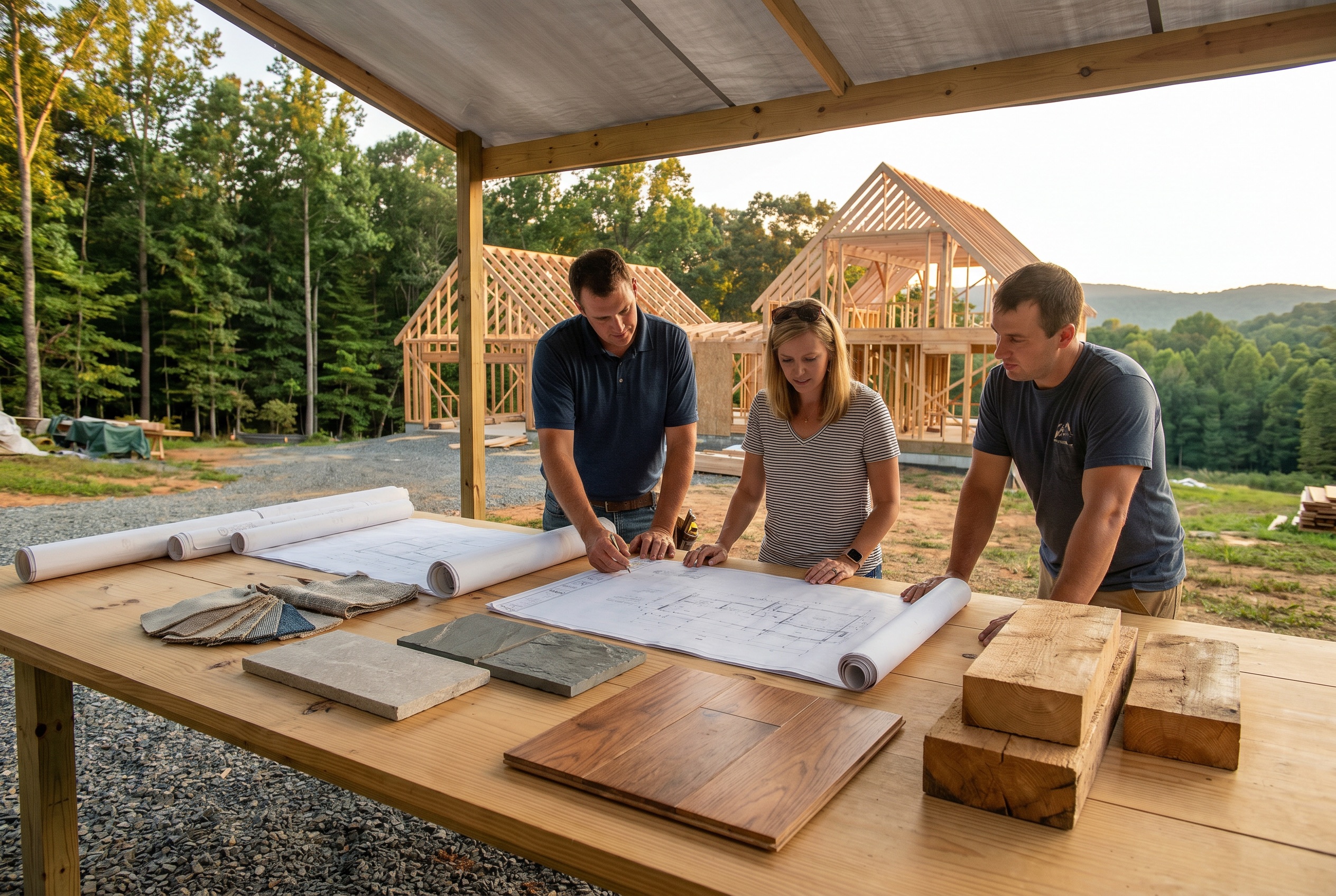
What Affects the Cost to Build a House in Virginia?
The cost to build a house in Virginia depends on more than square footage alone. Land conditions, site preparation, home design, materials, finish selections, permitting, and utility needs can all affect the final price. For homeowners in Central Virginia, especially those building on rural land or wooded property, understanding these factors early can make the process much easier to plan.
Every custom home is different, but most cost differences come from a few major categories. Knowing what those are can help you ask better questions, compare builders more confidently, and avoid surprises later in the process.
The Land Itself Can Change the Budget
One of the biggest factors in the cost of a new home is the property. A flat, cleared lot with easy access will usually be simpler to build on than a wooded, sloped, or undeveloped parcel.
In Central Virginia, many homeowners build on land in places like Bedford County, Campbell County, Amherst County, Nelson County, Pittsylvania County, and Appomattox County. These properties can be beautiful, but they may also require additional planning for grading, clearing, drainage, driveway access, septic systems, wells, and utility connections.
That is why early land evaluation matters. Before construction begins, a builder should look at how the home will sit on the property, where water naturally drains, how much site work may be needed, and whether the chosen home plan fits the land well.
If you are planning to build on property you already own, Craftsman Custom Home Builders can help with the early planning process. You can learn more about that here: build on your land.
Site Work Is Often Overlooked
Homeowners often think first about the house itself: the kitchen, bedrooms, exterior style, flooring, and layout. Those choices matter, but the site work needed before the foundation is poured can also affect the total cost.
Site work may include clearing trees, preparing the driveway, grading the building pad, managing drainage, bringing utilities to the home, and preparing for septic or well systems when needed.
In areas with red clay soil or rolling terrain, drainage planning is especially important. Poor water management can create long-term problems around the foundation, driveway, and yard. Planning for these items up front helps protect the home and gives homeowners a more realistic picture of the full project cost.
For more on what builders evaluate before the work begins, this related article explains what home builders in Central Virginia know before construction starts.
Home Size and Layout Matter, But Not Always in a Simple Way
Square footage is one of the most obvious cost factors, but it is not the only design-related factor. Two homes with the same square footage can have different costs depending on layout, rooflines, foundation type, ceiling heights, porches, garages, and interior details.
A compact, efficient floor plan may cost less to build than a more complex design with multiple corners, large roof spans, or extensive custom features. A basement, crawl space, or slab foundation can also affect the budget depending on the land and the homeowner’s goals.
This is one reason it helps to start with flexible plans. Craftsman Custom Home Builders offers custom home plans that can be modified to fit the homeowner’s land, budget, and lifestyle.
Finish Selections Can Move the Number Quickly
Finishes play a major role in the cost to build a house in Virginia. Cabinets, countertops, flooring, lighting, plumbing fixtures, appliances, exterior materials, and trim details all contribute to the final price.
One common issue in custom home building is the use of allowances. An allowance is a placeholder amount for an item that has not been fully selected yet. If the homeowner later chooses finishes that exceed the allowance, the price goes up.
Craftsman Custom Home Builders uses a No Surprise Pricing approach to help reduce that uncertainty. Homeowners make many selections early in the process, which helps establish the total cost before construction begins. That is especially helpful when comparing design options, choosing finishes, and planning the project budget.
For a closer look at how pricing transparency helps during a build, read this article on why No Surprise Pricing changes the building-on-your-lot process.
Materials, Labor, and Building Standards Also Affect Cost
Construction costs are also shaped by material quality, labor, building code requirements, and the level of craftsmanship involved. Framing materials, windows, roofing, insulation, HVAC systems, and foundation work all affect both the upfront cost and the long-term performance of the home.
Energy-efficient products may affect the initial budget, but they can also improve comfort and reduce long-term operating costs. The U.S. Department of Energy offers helpful homeowner guidance on energy-efficient homes and building features through its Energy Saver resources.
For homeowners, the goal is not simply to choose the lowest number. It is to understand what is included in the price, how the home is being built, and whether the materials and systems are appropriate for the land, climate, and long-term use of the home.
Why Clear Pricing Matters Before Construction Begins
The best time to understand cost is before construction starts. Once work is underway, late decisions and unexpected changes can be stressful and expensive.
A clear pricing process helps homeowners understand the relationship between land, design, finishes, and construction. It also makes it easier to decide where to invest, where to simplify, and how to keep the project aligned with the original budget.
If you are considering building a home in Central Virginia, the team at Craftsman Custom Home Builders can help evaluate your land, review home plans, and provide transparent pricing before construction begins. You can start the conversation through the contact page.
FAQ
What is the biggest factor in the cost to build a house in virginia?
Land conditions, home size, layout complexity, finish selections, and site work are usually some of the biggest cost factors. For rural properties, septic, well, grading, and driveway access can also affect the budget.
Does building on your own land save money?
It can, but not always. Owning land removes the need to purchase a lot, but site development costs such as clearing, grading, utilities, septic, and well planning still need to be considered.
Why do custom home costs vary so much?
Custom home costs vary because each project has different land conditions, design choices, materials, finishes, and construction requirements.
How can homeowners avoid surprise costs when building?
Homeowners can reduce surprises by evaluating the land early, making finish selections before construction, asking detailed pricing questions, and working with a builder who uses a transparent planning process.

