
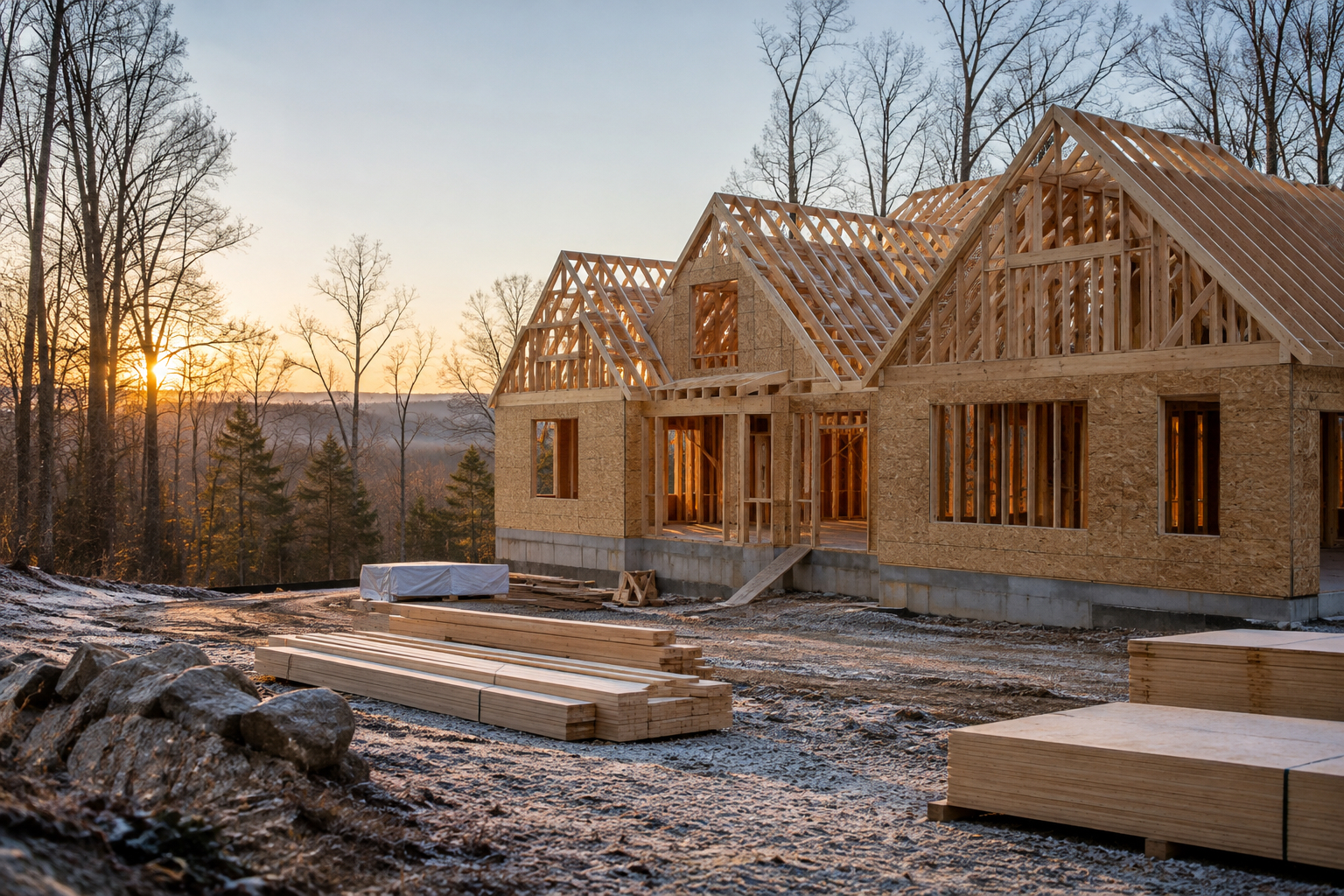
Is Building a House in Winter Doable in Virginia?
Building a house in winter is absolutely possible in Virginia, but colder weather changes how certain parts of the project need to be planned. Winter does not bring home construction to a complete stop. Instead, builders have to account for temperature, frozen or wet ground, shorter daylight hours, and the way cold weather affects materials such as concrete.
In Central Virginia, winter weather can vary widely. One week may bring mild afternoons, while another may bring overnight freezes, rain, snow, or muddy site conditions. A good construction schedule accounts for those changes rather than assuming every winter day will be unusable.
Concrete Requires Extra Attention in Cold Weather
Foundation work is one of the phases most affected by low temperatures. Concrete does not simply stop working when the weather turns cold, but it does need proper protection while it cures.
The American Concrete Institute’s Guide to Cold Weather Concreting explains that cold-weather practices are designed to prevent concrete from freezing at an early age, maintain appropriate curing conditions, and allow the concrete to develop the strength needed for construction to continue.
Depending on temperatures and conditions, contractors may use measures such as insulating blankets, heated enclosures, adjusted concrete mixtures, or other protective methods.
The important point for homeowners is that cold weather concrete work requires planning. A cold forecast does not automatically mean foundation work cannot happen, but builders need to use the right methods and wait when conditions are not appropriate.
Frozen or Saturated Ground Can Affect Site Work
Excavation and grading can also become more difficult during winter. Frozen ground may be harder to work, while repeated rain or thawing can turn a jobsite into mud.
This matters on Central Virginia properties where construction may involve clearing, grading, a long driveway, septic installation, or significant elevation changes. Red clay soil can become particularly messy when saturated.
A builder may adjust the sequence of work depending on site conditions. Some activities may be delayed until the ground improves, while others can continue elsewhere on the project.
If you are planning a build on undeveloped property, early site evaluation can help identify potential challenges before winter weather arrives. Craftsman Custom Home Builders works with homeowners who want to build on your land and need guidance on site development and home placement.
Framing Can Continue Through Much of the Winter
Once the foundation is complete, framing can often continue during colder weather. Wood framing itself is not dependent on warm temperatures in the same way concrete curing is.
Weather can still affect the schedule. Snow, ice, high winds, or prolonged rain may make outdoor work unsafe or impractical. Shorter winter days can also reduce productive daylight hours.
But a stretch of cool, dry weather can be perfectly workable for framing. This is why winter construction schedules tend to be flexible rather than simply shutting down for the season.
Getting the Home “Dried In” Changes the Equation
A major milestone in any build is getting the structure dried in. This generally means the roof, exterior sheathing, windows, and doors are installed well enough to protect the interior from most weather.
Once that happens, the project becomes much less dependent on outdoor conditions. Plumbing, electrical, HVAC, insulation, drywall, cabinetry, flooring, trim, and other interior work can continue even when the weather outside is less cooperative.
This is one reason a build that begins before or during winter does not necessarily remain weather-dependent for the entire season.
Winter Weather Can Affect the Schedule Without Derailing It
When homeowners ask about building a house in winter, they are often really asking whether the project will take significantly longer.
Sometimes winter weather does add time. A hard freeze may delay excavation. Heavy rain may make grading impractical. Snow or ice can temporarily shut down outdoor work. Material deliveries and inspections can also be affected during severe weather.
Those delays are usually part of normal construction planning rather than signs that the project is going wrong.
For a broader look at what influences a construction schedule, read how long it takes to build a house in Virginia.
Winter Can Be a Good Time for Planning and Selections
Even if your project is not ready for construction during the coldest part of the year, winter can still be productive.
Homeowners can use that time to evaluate land, finalize a floor plan, work through permits, choose finishes, review pricing, and prepare for site work. Those steps can put the project in a much stronger position when weather conditions improve.
Craftsman Custom Home Builders offers custom home plans that can be modified to fit your land, lifestyle, and budget. Making those decisions before the desired construction start can help prevent unnecessary delays later.
If you are thinking ahead to a spring start, this related guide on planning a custom home build explains what you can begin working on months before breaking ground.
Should You Avoid Starting a Custom Home in Winter?
Not necessarily. The better question is whether your property, plans, permits, and construction schedule are ready.
A winter start may make perfect sense on one project and less sense on another. A prepared lot with permits in place may be able to move forward efficiently, while a heavily wooded or sloped site requiring substantial grading may benefit from a different schedule.
If you are considering building a home in Central Virginia, the team at Craftsman Custom Home Builders can help evaluate your land, review home plans, and provide transparent pricing before construction begins. You can start the conversation through the contact page.
FAQ
Can you pour a foundation in the winter?
Yes, concrete can be placed in cold weather when proper cold-weather procedures are used. Builders may need to protect the concrete from freezing and maintain suitable curing conditions.
Does home construction stop when temperatures reach freezing?
No. Some activities may be delayed or require additional precautions, but many phases of construction can continue during cold weather.
Does building a house in winter take longer?
It can, especially if severe weather affects excavation, concrete work, grading, deliveries, or inspections. The impact depends on the property, construction phase, and actual weather conditions.
Is winter a good time to plan a custom home?
Yes. Winter can be a productive time to evaluate land, select a floor plan, work through permits, finalize finishes, and prepare for construction later in the year.
