
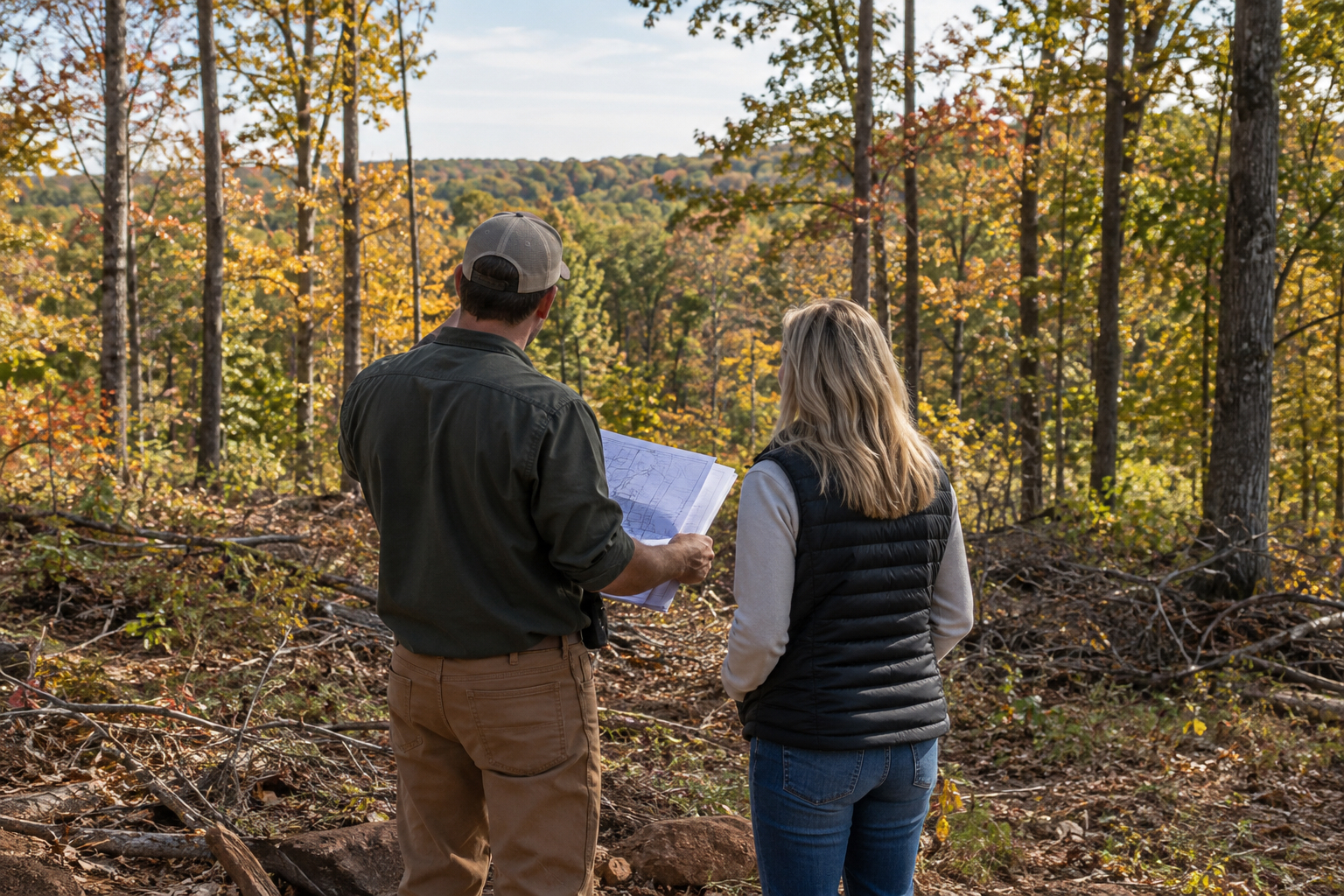
Why Fall Is a Good Time for Planning a Custom Home Build
Planning a custom home build for next year is easier when you start before you are ready to break ground. By the time construction begins, there may already be decisions to make about land, floor plans, permits, site preparation, pricing, finishes, utilities, and scheduling. Starting those conversations in the fall gives you time to work through them without rushing.
For homeowners in Central Virginia, that early planning can be especially helpful. Rural land, wooded lots, septic and well requirements, grading, drainage, and county approvals can all influence the project before the first piece of framing goes up.
Start With the Land
If you already own property, one of the first steps is understanding what it will take to build there. A beautiful lot may still need clearing, driveway access, grading, drainage work, septic planning, or utility coordination.
In places like Bedford County, Campbell County, Amherst County, Appomattox County, and the surrounding Lynchburg area, no two properties are exactly alike. A flat open site may be relatively straightforward, while a wooded or sloped property may need more preparation.
Having a builder evaluate the land early can help identify those needs before they affect the schedule or budget. Craftsman Custom Home Builders works with homeowners who want to build on your land and need guidance on site development before construction begins.
If you are still shopping for property, this related guide explains what to check before buying land to build a house.
Choose a Floor Plan Before the Calendar Gets Tight
The home plan shapes nearly every other decision in the project. It affects square footage, foundation type, rooflines, room placement, site layout, and overall cost.
Starting early gives you time to compare layouts and decide what actually matters to your household. Maybe you want a first-floor primary suite, a larger pantry, a screened porch, a home office, or a walkout basement. Those are easier to work into the design before the plan is finalized.
Craftsman Custom Home Builders offers custom home floor plans that can be modified to fit your land, lifestyle, and budget.
You can also read more about how to customize a floor plan when building a home.
Give Yourself Time for Permits and Approvals
Permits are another reason to start planning before you are ready to build. Depending on the property, a project may require zoning approval, a residential building permit, septic or well approval, driveway or entrance permits, land disturbance approvals, or other local requirements.
Some approvals move quickly. Others can take more time depending on the property and the local jurisdiction. Starting early gives you room to work through the process instead of waiting on paperwork when you would rather be starting construction.
For a detailed overview, see what permits are required to build a house in Virginia.
Work Through Pricing Before Construction Begins
One of the most valuable parts of planning a custom home build early is having time to understand the budget before work starts.
Home construction costs are shaped by more than the home itself. Land preparation, driveways, septic, wells, utilities, foundation type, square footage, roof complexity, materials, and finishes can all affect the final price.
Early planning gives homeowners time to compare options and make informed choices. It may be worth keeping the larger porch and simplifying another part of the plan, or investing more in the kitchen while choosing a more efficient overall footprint.
Craftsman Custom Home Builders uses a No Surprise Pricing approach that helps homeowners make key selections before construction begins so the project cost is clearer from the start.
For more on the numbers behind a build, read why transparent pricing matters for custom home building costs.
Make Major Selections Early
Cabinets, countertops, flooring, lighting, plumbing fixtures, siding, roofing, and other finishes all need to be selected at some point. Making those decisions early can keep the construction process moving and make the budget easier to understand.
It also gives homeowners time to think through choices instead of making decisions under pressure. A finish that looks good in isolation may not work as well once it is considered alongside flooring, cabinetry, wall colors, and exterior materials.
Early selections help the design feel more cohesive and give the builder better information for pricing and scheduling.
Understand the Timeline Before You Pick a Start Date
Custom home construction involves more than the months when the house is visibly taking shape. The overall process includes planning, permitting, land preparation, design decisions, selections, inspections, and construction.
That means homeowners should be cautious about choosing a target move-in date before they understand what needs to happen first. A realistic schedule should account for the property, the level of customization, local approvals, weather, and normal construction variables.
If you are trying to estimate the overall schedule, this guide explains how long it takes to build a house in Virginia.
Fall Planning Can Make Spring Feel Much Simpler
As the weather cools and the year starts winding down, it is easy to think of homebuilding as something to revisit later. But fall can be a productive time to evaluate land, review plans, talk through pricing, and make selections for a future build.
Those early steps can make a big difference when you are ready to move forward. Instead of starting from zero, you may already understand the property, have a plan in place, know what permits are needed, and have a clearer picture of the budget.
Start Planning Before You Are Ready to Break Ground
If you are planning a custom home build for next year, you do not need to have every decision made today. You just need to start answering the right questions early enough that the process does not become rushed later.
If you are considering building a home in Central Virginia, the team at Craftsman Custom Home Builders can help evaluate your land, review home plans, and provide transparent pricing before construction begins. You can explore completed homes in the portfolio or start the conversation through the contact page.
FAQ
When should I start planning a custom home build?
It is helpful to start several months before you hope to begin construction. Land evaluation, plan decisions, permits, pricing, and selections can all take time.
What should I do first when planning a custom home?
Start by reviewing your land or potential property, identifying your budget and priorities, and talking with a builder about floor plans and site conditions.
Can I start planning in the fall for construction next year?
Yes. Fall can be a good time to evaluate land, review plans, work through permits, and make selections before the construction schedule gets closer.
Do I need to own land before talking to a builder?
No. A builder can often help evaluate land you are considering and explain site-development needs before you make a purchase.
